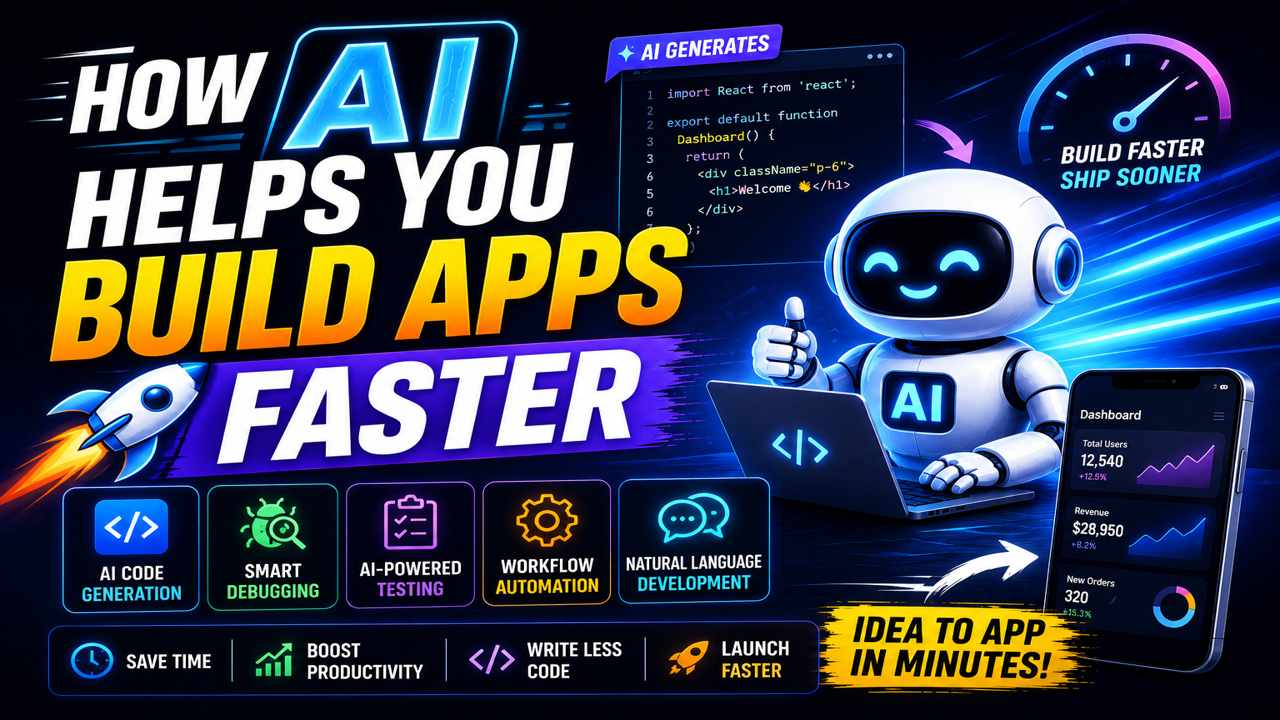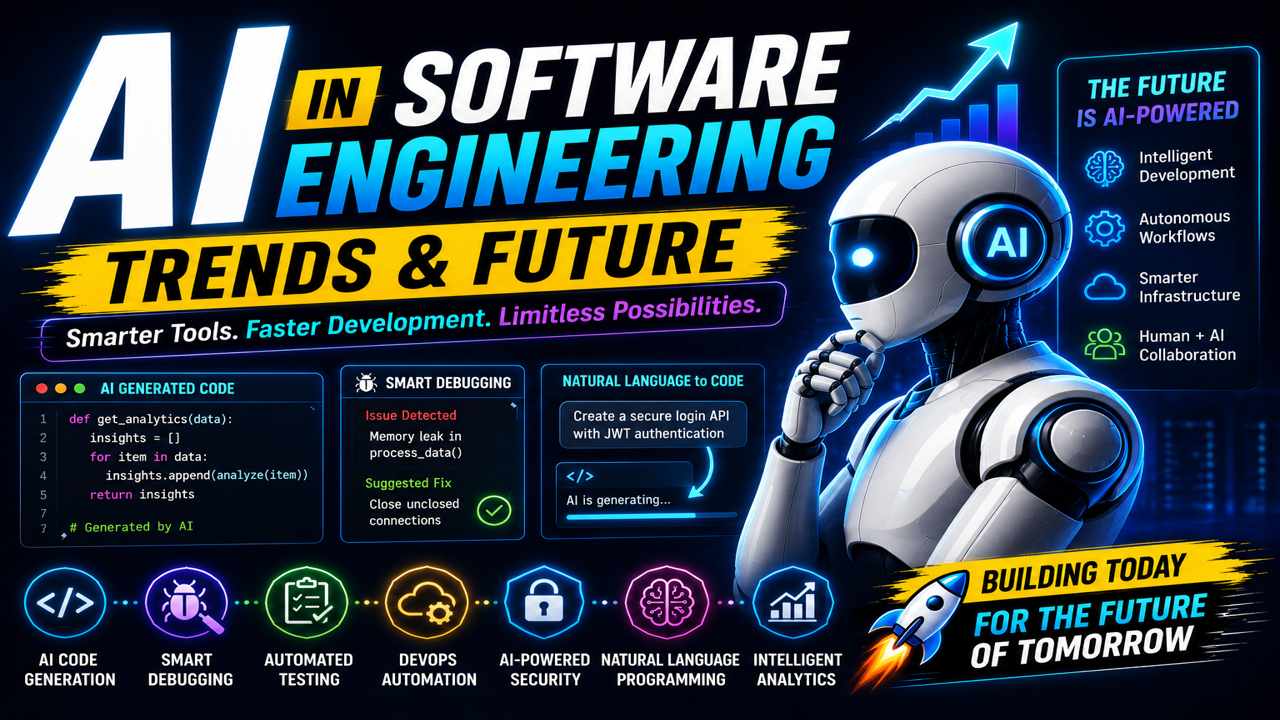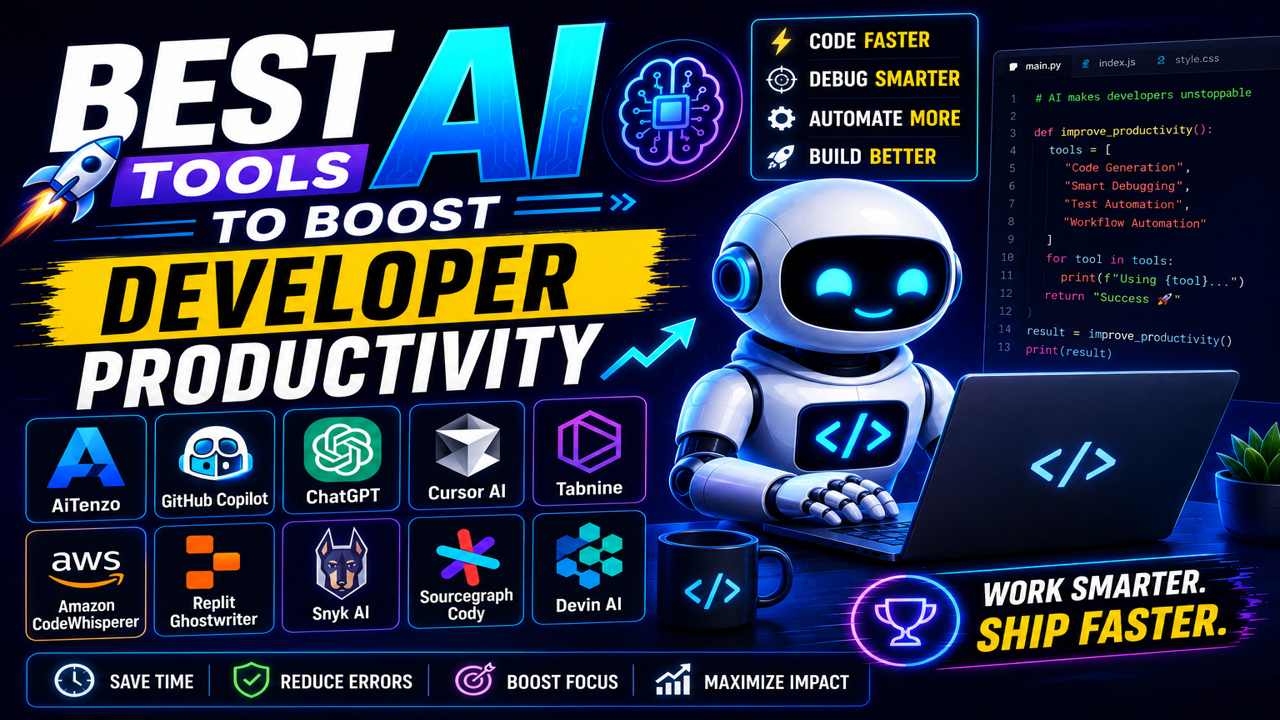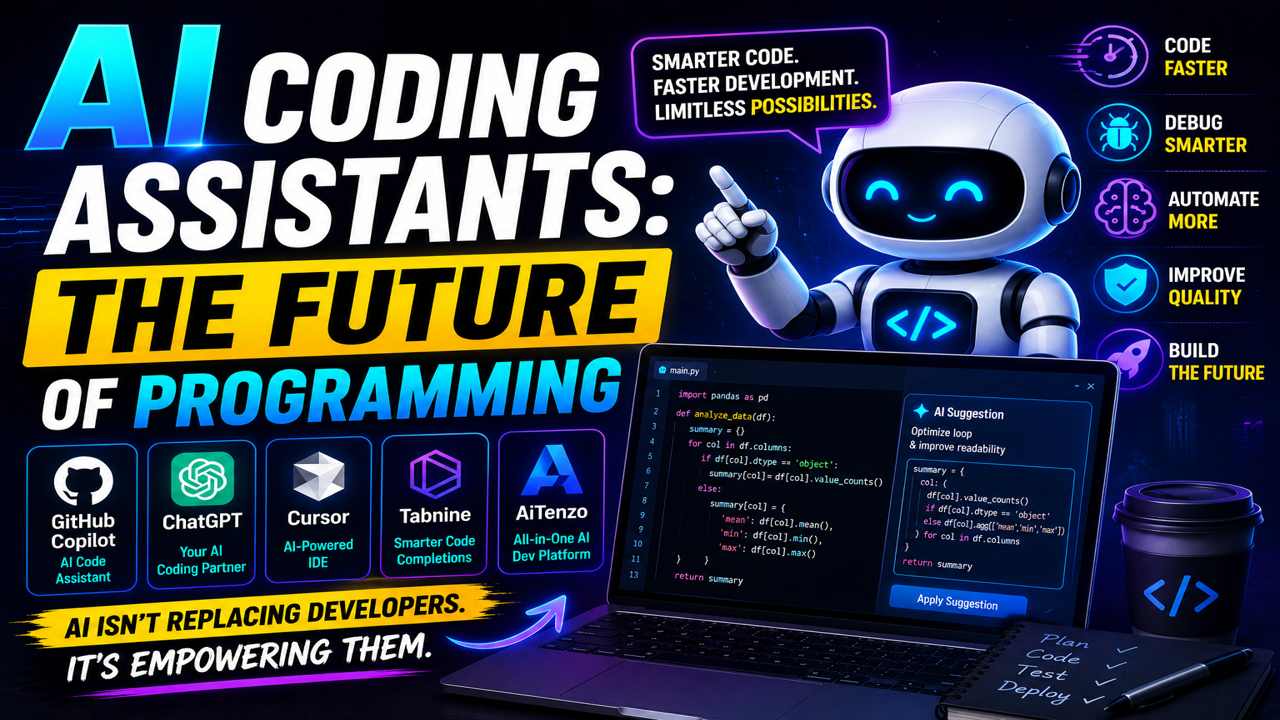
Software development is entering a new era where AI is no longer just a support tool—it’s becoming an active participant in the programming process. AI coding assistants are changing how developers write, debug, optimize, and deploy applications, fundamentally reshaping the future of software engineering.
In 2026, developers are increasingly relying on AI systems to accelerate workflows, reduce repetitive work, and improve productivity. What once required hours of manual coding can now be generated, reviewed, and refined within minutes.
The shift is not simply about writing code faster. It’s about transforming how software is built entirely.
What Are AI Coding Assistants?
AI coding assistants are intelligent software systems designed to help developers throughout the development lifecycle.
Unlike traditional autocomplete tools, modern AI assistants can:
- Understand code context
- Generate full functions and modules
- Detect and fix bugs
- Explain complex logic
- Optimize performance
- Automate repetitive engineering tasks
These systems use advanced machine learning models trained on massive programming datasets to predict and generate meaningful outputs.
Today’s AI assistants act less like tools and more like collaborative engineering partners.
Why AI Coding Assistants Are Growing So Fast
The demand for faster software delivery is increasing rapidly.
Companies are under pressure to:
- Launch products faster
- Reduce development costs
- Scale engineering teams efficiently
- Maintain higher code quality
AI coding assistants directly address these challenges.
Developers spend a significant amount of time on:
- Boilerplate code
- Debugging
- Searching documentation
- Refactoring
- Repetitive implementation tasks
AI systems eliminate much of this overhead.
This allows developers to focus more on:
- Product logic
- Architecture
- Innovation
- User experience
The productivity gains are becoming impossible to ignore.
From Autocomplete to Intelligent Development
Early coding assistants were limited to basic code prediction.
Modern AI systems now provide:
- Context-aware code generation
- Multi-file understanding
- Repository-level analysis
- Natural language programming
Instead of suggesting single lines, AI can now generate:
- Entire APIs
- Authentication systems
- Database integrations
- UI components
- Deployment workflows
The interaction model between developers and software is evolving rapidly.
Programming is becoming more conversational.
AI Coding Assistants Are Changing Developer Workflows
The traditional development process involved:
- Writing code manually
- Searching documentation
- Debugging errors manually
- Testing repeatedly
- Optimizing later
AI-assisted development compresses this cycle dramatically.
Now developers can:
- Describe requirements in plain English
- Generate implementations instantly
- Detect issues during development
- Refactor automatically
- Optimize continuously
This transforms software development from a purely manual process into a collaborative workflow between humans and AI.
Faster Development Without Sacrificing Quality
One concern developers often have is whether AI-generated code reduces quality.
In many cases, AI actually improves consistency by:
- Enforcing coding patterns
- Suggesting cleaner implementations
- Identifying vulnerabilities early
- Reducing repetitive mistakes
Platforms like AiTenzo combine:
- AI code generation
- Smart debugging
- Workflow automation
- Optimization tools
to help developers accelerate development while maintaining code quality standards.
The key advantage is not just speed—it’s intelligent assistance across the full development lifecycle.
AI Is Reducing Repetitive Engineering Work
A major portion of programming involves repetitive implementation work.
Examples include:
- CRUD operations
- API integrations
- Form validation
- Authentication flows
- Standardized components
AI coding assistants excel at automating these predictable patterns.
This significantly reduces:
- Development fatigue
- Context switching
- Manual duplication
Developers can spend more time solving meaningful engineering problems rather than rewriting the same structures repeatedly.
Debugging Is Becoming AI-Assisted
Debugging has historically been one of the most time-consuming parts of software engineering.
Modern AI assistants can now:
- Analyze stack traces instantly
- Identify logical issues
- Suggest fixes automatically
- Explain why bugs occur
Instead of spending hours searching forums or documentation, developers receive contextual debugging support directly inside their workflow.
This changes debugging from:
- Reactive troubleshooting
- to:
- Intelligent problem resolution
AI Coding Assistants Help Developers Learn Faster
AI is also transforming developer education.
Junior developers now have access to:
- Real-time explanations
- Code recommendations
- Best-practice guidance
- Instant feedback
AI systems can explain:
- Framework concepts
- Algorithms
- Error messages
- Design patterns
in plain language.
This dramatically shortens learning curves and accelerates onboarding for new developers.
However, foundational programming knowledge still matters. Developers who rely entirely on AI without understanding core concepts may struggle with:
- System design
- Performance optimization
- Advanced debugging
- Architecture decisions
AI assists learning—but it does not replace engineering understanding.
The Rise of Natural Language Programming
One of the biggest shifts happening right now is natural language-driven development.
Developers can describe functionality such as:
“Build a secure authentication system with JWT login and password reset.”
AI can generate a working implementation instantly.
This changes the role of developers from:
- Writing every instruction manually
to:
- Guiding intelligent systems strategically
The barrier between ideas and implementation is shrinking rapidly.
Enterprise Development Is Becoming AI-Native
Large organizations are integrating AI into:
- Internal developer platforms
- DevOps pipelines
- Testing workflows
- Security analysis
- Infrastructure automation
AI coding assistants are helping enterprises:
- Reduce development cycles
- Improve code consistency
- Increase engineering efficiency
- Scale teams more effectively
Companies adopting AI-native development workflows are gaining a major operational advantage.
The Future Role of Developers
AI coding assistants are not replacing developers.
They are changing what developers spend their time doing.
As AI handles repetitive implementation work, human developers become increasingly responsible for:
- Architecture decisions
- Product strategy
- System scalability
- Creative problem-solving
- Ethical oversight
The future developer is becoming:
- A systems thinker
- An AI orchestrator
- A technical strategist
rather than simply a manual code writer.
AI Coding Assistants Will Become Standard
AI-assisted programming is quickly becoming the default development model.
In the next few years, coding without AI assistance may feel similar to developing without:
- Version control
- IDEs
- Cloud infrastructure
The productivity gap will become too large to ignore.
Developers who embrace AI workflows early are already:
- Building faster
- Automating more tasks
- Scaling projects efficiently
- Reducing operational friction
The future of programming is not human developers competing against AI.
It’s developers working alongside AI systems to build software faster, smarter, and at a much larger scale than ever before.